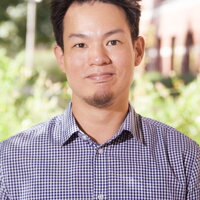
Biography
I am a biological and forensic anthropologist at George Mason University, where I am affiliated with the Forensic Science Research and Training Laboratory (FSRTL), a human taphonomic research facility. My work integrates forensic anthropology, skeletal biology, and quantitative methods, with an emphasis on applied research, method validation, and ethical practice.
My research focuses on forensic skeletal analysis, trauma interpretation, and population variation in biological profile estimation, particularly addressing the underrepresentation of Asian groups in skeletal biology and forensic standards. I also work in forensic taphonomy and decomposition research, contributing to regionally grounded, empirical approaches to postmortem interval estimation and case interpretation.
I am actively engaged in forensic anthropology consultation, including human vs. non-human determinations, skeletal assessment, search and recovery, and secondary review, and have worked with medical examiner’s and coroner’s offices across multiple U.S. jurisdictions. I am particularly interested in building sustainable bridges between research, practice, and training in forensic anthropology.
In addition to research and casework, I am deeply committed to student mentorship, scientific communication, and infrastructure building in forensic science. I regularly collaborate with medicolegal, academic, and community partners in the Washington, D.C. region and beyond.
Research Interests
Growth and Development
Quantitative Genetics
Human Skeletal Variation
Statistical Methods
Virtual Anthropology
Forensic Anthropology
Research Description
My research focuses on applied method validation, interpretation, and reliability in forensic anthropology. My work examines how commonly used forensic tools and analytical frameworks perform under real-world constraints, with particular attention to postmortem interval estimation, skeletal trauma interpretation, population variation, and digital documentation methods (e.g., 3D scanning and medical imaging). I also study how practitioner decision-making and representational choices influence forensic interpretation. Much of my research is conducted in close integration with student scholarship, with an emphasis on producing peer-reviewed, practice-relevant outcomes.
Education
2021 PhD in Anthropology, University of Illinois at Urbana-Champaign
2020 Graduate Minor in Statistics, University of Illinois at Urbana-Champaign
2016 MA in Physical Anthropology, New York University
2013 MS in Forensic Medicine, National Taiwan University
2008 BS in Medical Laboratory Science and Biotechnoloy, National Cheng-Kung University
External Links
Recent Publications
JOURNAL ARTICLES
Farley, M., & Yim, A. D. (2026). An exploratory analysis of decision-making in population affinity estimation among forensic anthropology practitioners in the United States. Science & Justice, 101500.
Cummings, C. R., Powell, E. N., & Yim, A. D. (2026). Applicability of handheld laser scanning for nonmetric skeletal assessment in biological profile estimation: a preliminary two-case study. International Journal of Legal Medicine.
Farley, M., Cummings, C., Placencia, M. K. C., Smith, N., Riddell, R., & Yim, A. D. (2026). Recognizing Iatrogenic Rib Trauma: A Forensic Anthropological Case Study. Forensic Anthropology.
Yim, A. D., Schell, M., & Zachwieja, A. (2026). Framing anatomical variation in anatomy textbooks: Language use and its implications. Anatomical Sciences Education.
Yim, A. D., Stock, M. K., & Winburn, A. P. (2025). Incorporating Evolutionary Theory Into Forensic Anthropology Methods and Practice: A Proof‐of‐Concept Study Using Skeletal Sex Estimation. American Journal of Biological Anthropology, 188(2), e70137.
Hughes, C., Yim, A. D., & Juarez, C. (2024). Considerations for age estimation accuracy: Method‐derived outcomes and practitioner interpretations. Journal of Forensic Sciences, 69(3), 755-764.
Connor, M., Belcher, W. R., Dabbs, G. R., Falsetti, A., Forbes, S. L., Gocha, T. P., ... Yim, A. D.& Zedjlik, K. (2024). From a Small Plot in Knoxville to a Worldwide Footprint: An Overview of Human Decomposition Facilities. Forensic Anthropology, 7(4).
Hughes, C., Yim, A. D., Juarez, C., Servello, J., Thomas, R., Passalacqua, N., & Soler, A. (2023). Investigating identification disparities in forensic anthropology casework. Plos One, 18(11), e0290302.
Go, M. C., Loewen, N., & Yuki, N., ... Yim, A. D., ... & Goliath, J. R. (2023). Pioneers of color: A counternarrative of foundational figures in forensic anthropology's history. Forensic Anthropology, 6, 206-217.
Yim, A. D., & Passalacqua, N. V. (2023). A Systematic Review and Meta-Analysis of the Effects of Race in the Criminal Justice System with Respect to Forensic Science Decision Making: Implications for Forensic Anthropology. Humans, 3(3), 203-218.
Yim, A. D., Cowgill, L., Katz, D. C., & Roseman, C. C. (2023). Variation in ontogenetic trajectories of limb dimensions in humans is attributable to both climatic effects and neutral evolution. Journal of Human Evolution, 179, 103369.
Winburn, A. P., Yim, A. D., & Stock, M. K. (2022). Recentering forensic anthropology within a multifaceted body of evolutionary theory: Strengthening method by making theory explicit. American Journal of Biological Anthropology, 179(4), 535-551.
Yim, A. D., Juarez, J. K., Goliath, J. R., & Melhado, I. S. (2022). Diversity in forensic sciences: Black, Indigenous, and People of Color (BIPOC) representation in different medicolegal fields in the United States. Forensic Science International: Synergy, 5, 100280.