In Memoriam and Tributes
Professor Emerita Olga Soffer
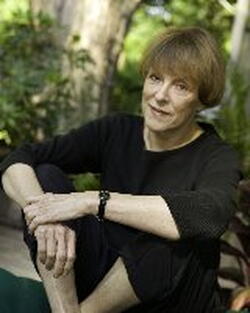
Olga Soffer, 83, Archaeologist Who Transformed the Study of Prehistoric Women, Dies
A Manhattan fashion executive who became one of the world's leading Paleolithic researchers, Dr. Soffer proved that Ice Age women — and the children and elders beside them — were not bystanders to prehistory but its makers, weaving sophisticated textiles more than 27,000 years ago and upending the myth of the lone male mammoth hunter.
Olga Soffer, a University of Illinois archaeologist whose meticulous re-examination of Upper Paleolithic artifacts overturned decades of assumptions about prehistoric life — and about the women who lived it — died on June 20, 2026, at her home in Los Angeles, of natural causes. She passed peacefully. She was 83.
Dr. Soffer spent the first half of her career staging runway shows and dreaming up events for a Brooklyn department store, and the second half excavating mammoth-bone settlements on the steppes of Russia and Ukraine. She saw no contradiction in this. “We come to archaeology from unfathomable directions,” she said.
The discovery that made her famous came not in the field but in a slide projector's light.Examining clay fragments from Upper Paleolithic sites in Moravia and Russia with her close friend and collaborator James M. Adovasio of the Mercyhurst Archaeological Institute, she identified what no one had previously thought to look for: the impressions of woven textiles pressed into clay more than 27,000 years ago. The find pushed back the known history of textile production by thousands of years and upended the standard reconstruction of Ice Age life, in which men were imagined hunting mammoths while women waited behind.
Dr. Soffer went further still. Scrutinizing the famous Venus figurines — the small, voluptuous female statuettes found across Upper Paleolithic Europe and long read as fertility symbols — she, Adovasio, and their colleague David Hyland observed, beginning in 1998, that many of them were wearing something. The Venus of Willendorf, she argued, bore not a “coiled coiffure” but a woven hat, carved with the precision of a weaver's instruction manual. Others wore snoods, bandeaus, sashes and belts. Fiber technology, in other words, was ancient and sophisticated — and, given that textiles are produced by women in nearly every ethnographic culture on record, almost certainly the work of the sex that had been written out of the story. The team laid out the full case in a landmark 2000 paper in Current Anthropology, “The 'Venus' Figurines: Textiles, Basketry, Gender, and Status in the Upper Paleolithic,” which drew wide coverage that year, including in New Scientist and on the BBC, and effectively rewrote the Ice Age wardrobe in the public imagination.
That insight became the spine of what may have been her most consequential argument: that the popular image of Paleolithic society — mighty hunters setting out alone to slaughter mammoths — was largely fiction. Dr. Soffer and her collaborators showed it was far more likely that men, women, children and elders all contributed to the work of communal life, tossing immense nets, probably woven by women, over large areas to trap the era's actual Sunday dinners: hares, foxes,small game. “If the public should understand one thing about prehistory,” she said, “it is that the past was peopled not only by prehistoric men, but also by prehistoric women.”
The research reached a wide public on June 15, 2001, when ABC's Nightline, in a report by Robert Krulwich, profiled Dr. Soffer's work under a fitting frame: a fashion insider turned archaeologist, tracing clothing back to the Ice Age. The full argument later appeared in “The Invisible Sex: Uncovering the True Roles of Women in Prehistory” (Smithsonian Books/Collins, 2007), co-authored with J. M. Adovasio and the science writer Jake Page, in which Dr. Soffer and Adovasio — two of the world's leading experts on perishable artifacts such as basketry, cordage, and weaving — argued that women invented critical materials including the clothing necessary for life in colder climates, the ropes used to make rafts that enabled long-distance travel by water, and the nets used for communal hunting, and played a central role in the development of language and social life. Her scholarship reached well beyond academia: she served as a research consultant to the novelist Jean M. Auel for her best-selling “Earth's Children” series, beginning with “The Clan of the Cave Bear,” helping ground its Paleolithic world in accurate archaeology.
Her scholarship appeared in journals including the Journal of Human Evolution and Antiquity, and was profiled in Scientific American and Scientific American Discovering Archaeology. Her first major monograph, “The Pleistocene Old World: Regional Perspectives” (1987), was reviewed in Scientific American's Books column by the archaeologist Brian Fagan, who two decades later would offer a blurb for “The Invisible Sex.” She was a member of the American Association for the Advancement of Science, the American Anthropological Association, the European Association of Archaeologists, the Society for American Archaeology, and the Union Internationale des Sciences Préhistoriques et Protohistoriques. She received an honorary doctorate from the Russian Academy of Sciences — a distinction she described, with characteristic dry humor, as evidence that the circle had closed: “From losing the civil war in 1921, to returning as an American scholar. Yes, you can go home again.”
Olga Aleksandrovna Shabunin was born on September 9, 1942, in Belgrade, then the capital of Nazi-occupied Yugoslavia. Her parents were Alexander M. Shabunin, a Russian-born businessman, and Galina Girs Shabunin, whose family had fled Crimea in 1920 on the last ships of the White Army evacuation. Both families were part of the great wave of Russian White émigrés who scattered across the Balkans and Western Europe after the Bolshevik Revolution before eventually reaching the Americas. On her mother's side, the family traced its line to Count Latalski-Lyapushinski, her maternal grandmother's father, from a noble Polish family in northwestern Poland whose coat of arms, depicting truth, a lion, and peace, was recognized and granted in 1538.
The family was expelled from Tito's Yugoslavia in 1951, when Olga was eight. They spent four years in the San Sabba Displaced Persons Camp in Trieste, Italy. Their path out came after her uncle, Eugene Girs — who had served in the Yugoslav Army in World War II, was captured by German forces, and, because he held Yugoslav rather than Soviet citizenship, was repatriated to Yugoslavia when his camp was liberated rather than sent on to a Soviet labor camp as many Russian-born prisoners were — and his wife, Nina, immigrated to Brooklyn in 1953 under U.S. legislation that gave priority to former Allied prisoners of war and their immediate families. Having relatives already established in the United States moved the rest of the family up the waiting list. They left Rome on September 4, 1955, aboard a cargo plane being ferried to NewYork for refurbishing — fitted out for the flight with rows of folding chairs and no bathroom on board — making refueling stops in the Azores, where eight-year-old Olga tried pineapple for the first time, and in Newfoundland, where she tried bacon for the first time. A few hours after leaving Newfoundland, the plane landed at Idlewild Airport (now Kennedy) in Queens, New York, on September 5, 1955, where Eugene and Nina waited for them on the tarmac.
She attended Thomas Jefferson High School in Brooklyn's East New York neighborhood, then one of the highest-ranked public schools in the country for producing doctoral graduates, and enrolled at Hunter College in Manhattan — at the time a women's college by day, with a coeducational evening School of General Studies — earning a degree in political science. Her first job was at Abraham & Straus, the Brooklyn-based department store chain, where she was hired into a management training program designed to recruit recent college graduates and groom them for executive roles. After completing it, she was appointed assistant buyer for cosmetics before moving into the role she loved: Special Events Coordinator for fashion, where she promoted seasonal trends and oversaw marketing campaigns designed to draw in customers. It was in that role that she cast a pre-teen Brooke Shields in one of the store's in-house fashion shows, and in 1971 conceived and produced the A&S Gourmet Festival, featuring James Beard. She worked at Abraham & Straus for twelve years in all, and left, she later said, when she stopped caring whether navy blue or dark brown socks would be the season's next big item.
Art classes taken on a whim led her from Picasso to Cubism to African art to primitive art to prehistoric art — and from there, as she put it, “into prehistoric life, and here we are.” She earned her doctorate in anthropology from the Graduate Center of the City University of New York while still working part-time in fashion. She taught as an adjunct instructor of anthropology at Hunter College (1978–80) and Lehman College (1979–80), then as an instructor at the University of Wisconsin at Milwaukee (1980–85), before joining the anthropology department at the University of Illinois at Urbana-Champaign as an assistant professor in 1985. She was promoted to associate professor in 1988 and to full professor in 1992, a rank she held until her retirement in 2008, after which she was named Professor Emerita, a title she held for the rest of her life. In 1992 she was also a visiting professor at the Centre de Recherches Archéologiques in Meudon and Valbonne, France.
Her summers were spent in the field. She excavated for more than two decades at Mezhyrich, the Upper Paleolithic mammoth-bone settlement in Ukraine, and at Avdeevo in Russia, navigating the Soviet system, the post-Soviet system, and the particular challenges of being a woman in a field still dominated by men. Her solution was elemental: move enough dirt, from glamorous enough sites, and no one could argue with the credentials. "You don't quibble with someone who works in sites with 1,000 dead mammoths," she said. Her image and research have been featured at the American Museum of Natural History and at the Field Museum in Chicago, in connection with its exhibits on the mammoth-bone dwellings she helped bring to light.
She retired from the University of Illinois in the summer of 2008 as Professor Emerita and moved to Los Angeles to be near her daughter, Alexandra (Sasha) Beattie, and grandchildren, Mena and Jake, whom she adored. She loved being a grandmother above all else, and delighted in infusing Mena and Jake with her own loves — art, food, culture, language, and travel. In retirement she remained intellectually engaged, traveling, reading widely, frequenting art and cultural institutions with her grandchildren, curing vodka for close friends and family, andcooking prodigiously — including their traditional Christmas Eve dinner of beef bourguignon with potatoes roasted in duck fat.
She is survived by her daughter, Alexandra (Sasha) Beattie, and her grandchildren, Jake Leland Beattie and Mena Simone Beattie, all of Los Angeles; her dear friend and “first daughter,” Marcia Hurwitz; and her best friend and “brother,” Robert “Bob” Averne.
Full obituary was written and approved by Professor Olga Soffer's family.